
El arte, especialmente el arte abstracto, suele malinterpretarse como un arrebato de azar, un goteo accidental o una mancha fortuita sobre la superficie. Sin embargo, quienes habitamos el estudio sabemos que la verdadera obra no nace del accidente, sino de una disposición interior cultivada en el silencio. De los momentos que nadie ve, de las preguntas, de las luchas internas, del paso de los días cultivando el corazón interior.
Crear, y en el caso especifico de Pintar es, en esencia, un acto de ordenamiento espiritual. Cada capa de color, cada veladura que busca una textura y cada decisión sobre la opacidad de un pigmento es un ejercicio de claridad. No buscamos solo una estética externa; buscamos manifestar una armonía que ya debe existir, o estar gestándose, dentro de nosotros.
«No se puede considerar feliz a alguien que carezca de prudencia, justicia, fortaleza y templanza. Circunstancias fortuitas o de azar pueden dar bienes exteriores al alma. Pero las personas no son justas ni prudentes por efecto de azar, sino por un hábito y una disposición interior».
Al igual que en la cita de Aristóteles, la felicidad y la paz en el en la vida y en el arte no son golpes de suerte. Es un camino, un largo recorrido de experiencias, alegrías y dolores, placeres y dolores, y el encuentro del equilibrio entre todo eso. Son las luchas internas, los logros que alcanzamos en el corazón. El auténtico avance surge de la fortaleza para sostener la mirada ante el lienzo en blanco y de la templanza para no dejarse arrastrar por cualquier impulso sino por el impulso auténtico que nace de ese corazón y ese espíritu sin interferencias mentales ni juicios. El desarrollo de la espiritualidad a través de la pintura es un hábito diario; es el despertar consciente a una plenitud que no depende de los aplausos externos, sino de la coherencia entre nuestro ser y el trazo.
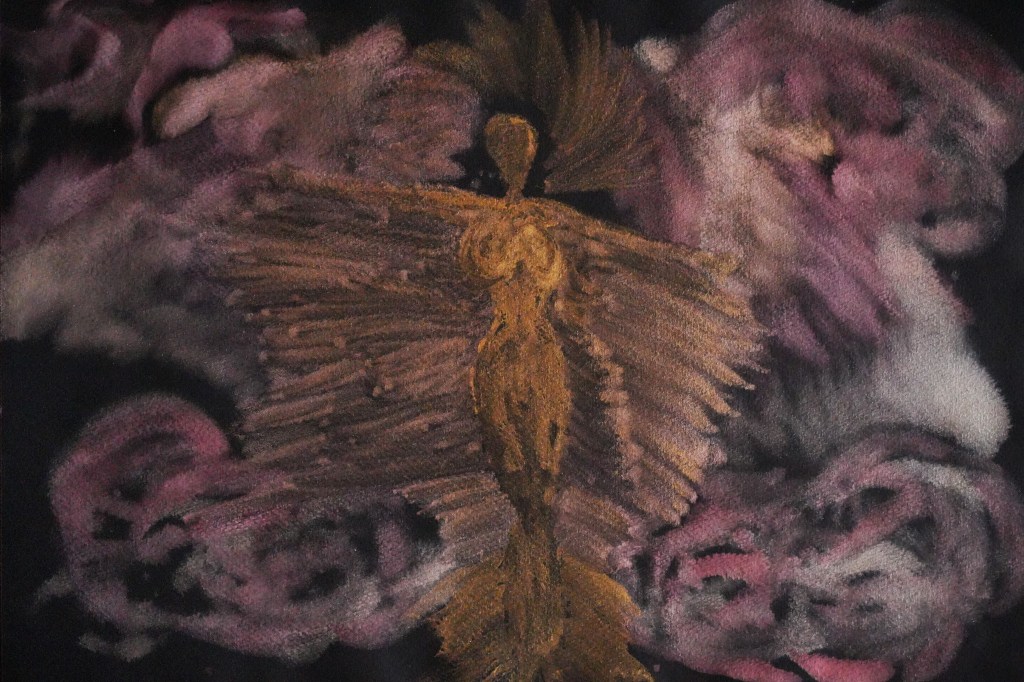
Cuando conectamos con esa energía profunda —esa fuerza vital que fluye como el océano—, el arte deja de ser un objeto decorativo para convertirse en un mapa de nuestra libertad. Solo a través de esa disciplina interna logramos que la obra respire, ofreciendo al espectador no solo una imagen, sino un refugio de serenidad y luz.
English Version:
Art, especially abstract art, is often misinterpreted as a random outburst, an accidental drip, or a chance stain on a surface. However, those of us who inhabit the studio know that true art is born not from accident, but from an inner disposition cultivated in silence. From unseen moments, from questions, from internal struggles, from the passing of days nurturing the inner heart.
Creating, and in the specific case of painting, is essentially an act of spiritual ordering. Each layer of color, each glaze seeking texture, and each decision regarding the opacity of a pigment is an exercise in clarity. We do not seek merely an external aesthetic; we seek to manifest a harmony that must already exist, or be gestating, within us.
«One cannot consider someone happy who lacks prudence, justice, fortitude, and temperance. Fortuitous or chance circumstances may bring external goods to the soul. But people are not just or prudent by chance, but by habit and an inner disposition.»
Just as in Aristotle’s quote, happiness and peace in life and in art are not strokes of luck. It is a path, a long journey of experiences, joys and sorrows, pleasures and pains, and the discovery of balance among them all. It is the inner struggles, the achievements we attain in our hearts. True progress arises from the strength to gaze upon the blank canvas and from the temperance to not be swept away by any impulse, but rather by the authentic impulse that springs from that heart and spirit, free from mental interference or judgment. The development of spirituality through painting is a daily habit; it is the conscious awakening to a fullness that does not depend on external applause, but on the coherence between our being and the brushstroke.
When we connect with that profound energy—that vital force that flows like the ocean—art ceases to be a decorative object and becomes a map of our freedom. Only through that internal discipline do we allow the work to breathe, offering the viewer not just an image, but a refuge of serenity and light.
 Lucio Carbeli F. Bellolio