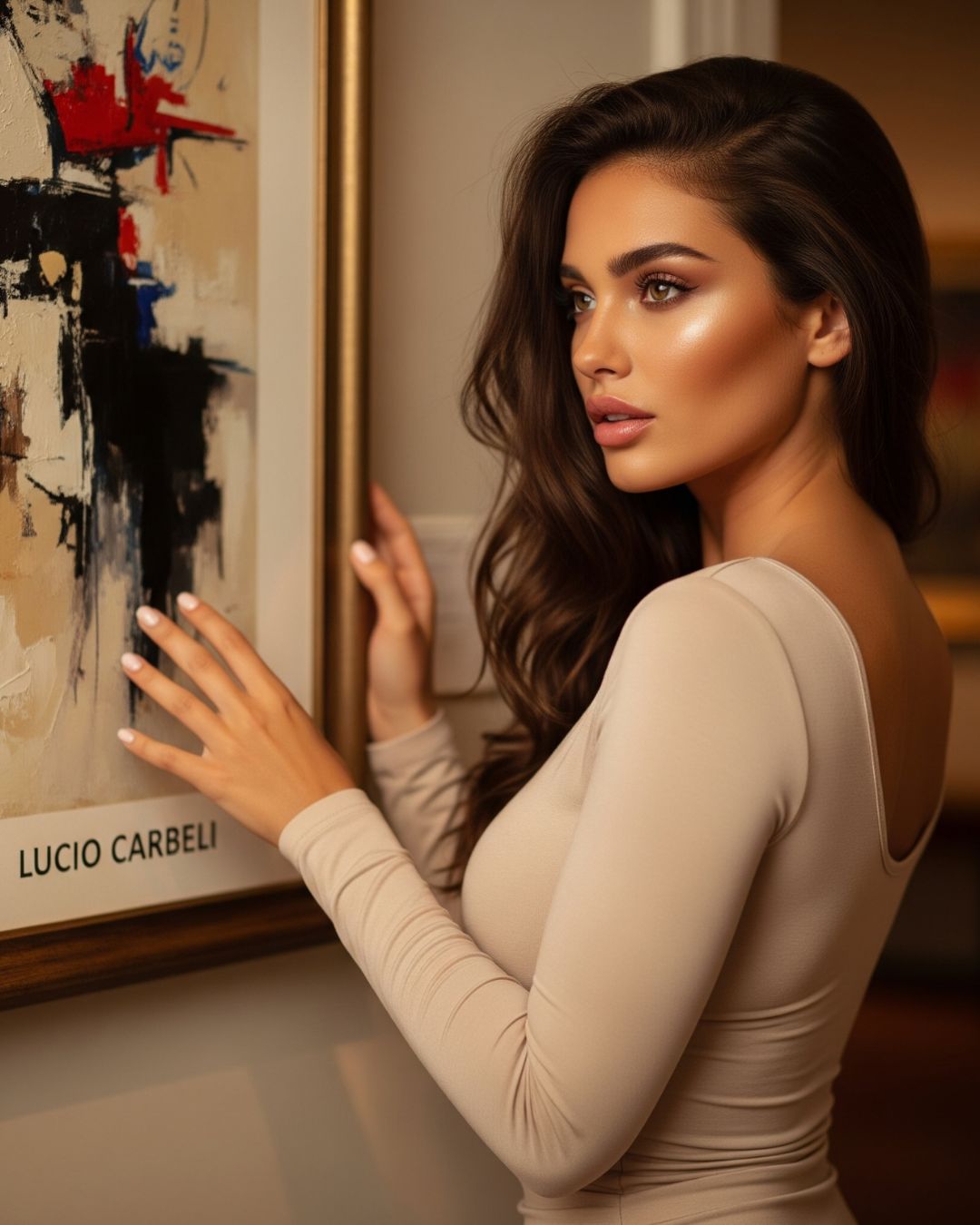
«You gave me peace in a lifetime of war» – le dice Aquiles a Briseida en una hermosa escena de Troya. Un guerrero que, en medio del fragor de la batalla, descubre que el amor puede ser más poderoso que la espada. Pero esta transformación épica no ocurre solo en los campos de batalla antiguos; sucede cada día en los estudios de artistas de todo el mundo, donde el lienzo se convierte en su propia Troya personal.
El Lienzo como Campo de Batalla
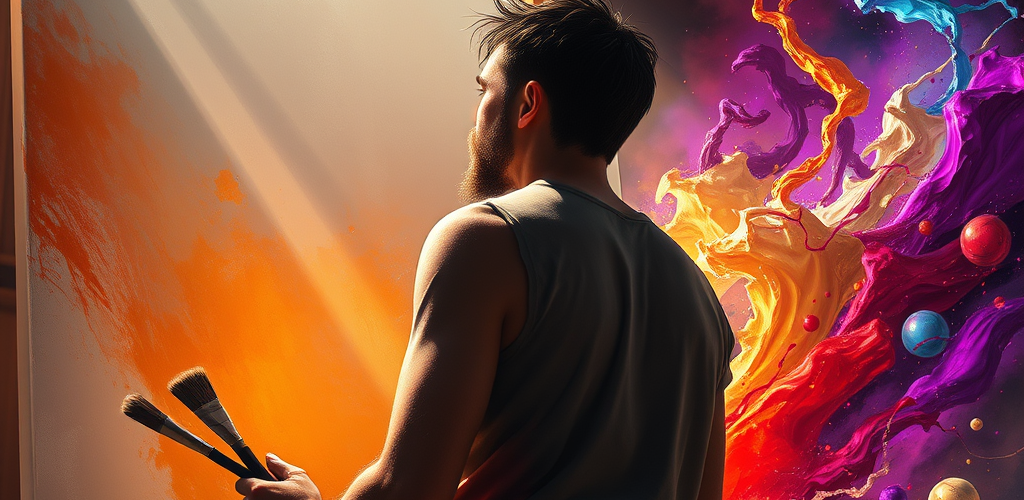
Cada mañana, cuando el artista se enfrenta al lienzo en blanco, libra una guerra silenciosa pero épica. Como Aquiles empuñando su lanza, el artista toma su pincel, pero no siempre con el corazón dispuesto para la batalla. Porque somos humanos, y los humanos tenemos días grises, mañanas donde el ánimo está quebrado sin razón aparente, tardes donde la inspiración parece haberse ido lejos y la energía ni el clima acompañan..
Es precisamente en estos momentos cuando cada pincelada se convierte en un acto heroico. Continuar pintando cuando el alma duele, cuando la motivación ha huido como los troyanos tras las murallas, cuando ni siquiera sabemos por qué nos sentimos vacíos. El artista debe romper esa inercia, vencer la resistencia interna y dar esa primera pincelada. Y luego otra. Y otra más.
Como los guerreros en Troya que continuaban luchando día tras día, sin saber si verían el amanecer, el artista continúa creando, pincelada a pincelada, construyendo su obra en medio de la batalla personal contra el desánimo, la duda, la oscuridad interior.
La Guerra de los Colores
En una obra abstracta, los colores libran su propia guerra épica. Los rojos sangran en el lienzo como la pasión y la furia de Aquiles, representando la intensidad del combate emocional. Los azules se extienden como la melancolía del mar Egeo, cargados de nostalgia y pérdida. Los negros avanzan como la noche troyana, pesados con la sombra del destino.
Pero cuando estos colores se encuentran, cuando el rojo toca el azul y nace el púrpura, sucede algo mágico. Como cuando Aquiles conoce a Briseida, la guerra se transforma en algo más profundo. El púrpura del amor cambia toda la composición, reorganiza las fuerzas en el lienzo, crea una nueva armonía que trasciende el conflicto original.
Los amarillos aparecen como destellos de esperanza, como la aurora que promete el fin de la batalla. Los verdes emergen como la vida que renace después de la destrucción. Y así, color tras color, pincelada tras pincelada, el artista no solo pinta: alquimiza sus emociones en guerra hacia una nueva síntesis.
El Encuentro con la Musa: La Briseida Interior
Pero la verdadera transformación sucede cuando el artista encuentra su «Briseida» interior. No es solo inspiración; es algo más profundo y arquetípico. Como Beatrice guiando a Dante a través del Paraíso, como Atenea inspirando sabiduría a los héroes griegos, como Arwen ofreciendo esperanza a Aragorn en las tierras sombrías de la Tierra Media.
Esta fuerza femenina arquetípica representa la intuición creativa, la sabiduría que trasciende la técnica, la conexión con lo sagrado del acto creativo. Cuando el artista la encuentra e integra, deja de pintar para la gloria, para el reconocimiento, para probar algo al mundo. Como Aquiles transformado por el amor, comienza a crear desde un lugar diferente: desde la paz interior, desde la conexión con algo más grande que él mismo.
Ya no es el guerrero que busca honor en la batalla; se convierte en el poeta que encuentra belleza en la vulnerabilidad, en el canal que permite que algo divino fluya a través de sus manos hacia el lienzo.
La Paz en el Acto Creativo
Cuando esto sucede, cada pincelada se convierte en una oración, cada color en una palabra de un lenguaje sagrado que solo el corazón comprende. El estudio se transforma: ya no es un campo de batalla, sino un templo donde se celebra la unión entre lo humano y lo divino, entre el dolor y la belleza, entre la guerra y la paz.
El artista abstracto, como Aquiles con Briseida, descubre que en medio de una vida de luchas internas, de días difíciles, de batallas contra la duda y el desánimo, existe una fuerza que puede dar paz: el acto puro de creación, la entrega total al momento presente donde solo existen el pincel, el color y la respiración.
Y al final, cuando contemplamos una obra abstracta verdaderamente lograda, no vemos solo colores y formas. Vemos el registro de una transformación, la huella de un guerrero que encontró su paz, la evidencia de que el amor – por el arte, por la vida, por la belleza – puede vencer cualquier guerra interior.
«Me diste paz en una vida de guerra» – susurra el artista a su obra terminada, sabiendo que en cada pincelada heroica, en cada color que se atrevió a mezclar, en cada momento que eligió crear a pesar del dolor, encontró su propia Briseida: la fuerza eterna del arte que transforma el sufrimiento en belleza.*
…………
English version:
«The canvas as a battlefield: heroism of the artist»
«You gave me peace in a lifetime of war,» Achilles tells Briseis in a beautiful scene from Troy. A warrior who, amidst the heat of battle, discovers that love can be mightier than the sword. But this epic transformation doesn’t only happen on ancient battlefields; it happens every day in artists’ studios around the world, where the canvas becomes their own personal Troy.
The Canvas as a Battlefield
Every morning, when the artist faces the blank canvas, he wages a silent but epic war. Like Achilles wielding his spear, the artist takes up his brush, but not always with his heart ready for battle. Because we are human, and humans have gray days, mornings where spirits are broken for no apparent reason, afternoons where inspiration seems to have vanished and neither energy nor the weather is in sync.
It is precisely in these moments that every brushstroke becomes a heroic act. To continue painting when the soul aches, when motivation has fled like the Trojans after the walls, when we don’t even know why we feel empty. The artist must break that inertia, overcome internal resistance, and make that first brushstroke. And then another. And another.
Like the warriors at Troy who continued fighting day after day, not knowing if they would see the dawn, the artist continues creating, brushstroke by brushstroke, building his work in the midst of a personal battle against discouragement, doubt, and inner darkness.
The War of Colors
In an abstract work, colors wage their own epic war. Reds bleed onto the canvas like the passion and fury of Achilles, representing the intensity of emotional combat. Blues spread like the melancholy of the Aegean Sea, heavy with nostalgia and loss. Blacks advance like the Trojan night, heavy with the shadow of destiny.
But when these colors meet, when red touches blue and purple is born, something magical happens. Like when Achilles meets Briseis, war transforms into something deeper. The purple of love changes everything. The composition reorganizes the forces on the canvas, creating a new harmony that transcends the original conflict.
The yellows appear as glimmers of hope, like the dawn promising the end of the battle. The greens emerge like life reborn after destruction. And so, color after color, brushstroke after brushstroke, the artist doesn’t just paint: he alchemizes his warring emotions toward a new synthesis.
The Encounter with the Muse: The Inner Briseid
But the true transformation happens when the artist finds his inner «Briseid.» It’s not just inspiration; it’s something deeper and archetypal. Like Beatrice guiding Dante through Paradise, like Athena inspiring wisdom to the Greek heroes, like Arwen offering hope to Aragorn in the shadowlands of Middle-earth.
This archetypal feminine force represents creative intuition, the wisdom that transcends technique, the connection to the sacredness of the creative act. When the artist finds and integrates it, he stops painting and For glory, for recognition, to prove something to the world. Like Achilles transformed by love, he begins to create from a different place: from inner peace, from a connection with something greater than himself.
He is no longer the warrior who seeks honor in battle; he becomes the poet who finds beauty in vulnerability, in the channel that allows something divine to flow through his hands to the canvas.
Peace in the Creative Act
When this happens, each brushstroke becomes a prayer, each color a word in a sacred language that only the heart understands. The studio is transformed: no longer a battlefield, but a temple where the union between the human and the divine, between pain and beauty, between war and peace, is celebrated.
The abstract artist, like Achilles with Briseis, discovers that in the midst of a life of internal struggles, of difficult days, of battles with doubt and discouragement, there is a force that can bring peace: the pure act of creation, the total surrender to the present moment where only the brush, the color and breath.
And in the end, when we contemplate a truly accomplished abstract work, we don’t just see colors and shapes. We see the record of a transformation, the imprint of a warrior who found his peace, evidence that love—for art, for life, for beauty—can conquer any inner war.
«You gave me peace in a life of war,» the artist whispers to his finished work, knowing that in every heroic brushstroke, in every color he dared to mix, in every moment he chose to create despite the pain, he found his own Briseis: the eternal force of art that transforms suffering into beauty.
Fuegos Artificiales y Pinceladas: Reflexión sobre la Independencia Creativa
Cada 4 de julio, cuando las primeras chispas de luz estallan contra el cielo nocturno, presenciamos algo más que una celebración patriótica. Esas explosiones de rojo, blanco y azul que se dispersan en el aire son, en esencia, arte abstracto en movimiento: formas puras, colores intensos, gestos efímeros que comunican emociones sin necesidad de palabras.
La Primera Declaración de Independencia
El 4 de julio de 1776, cincuenta y seis hombres firmaron un documento que cambiaría el mundo. Cada firma era un acto de soberanía individual que construía algo colectivo: la libertad de una nación. Pero lo que muchos no consideran es que este acto fue, fundamentalmente, un gesto creativo. Los fundadores no siguieron un manual; improvisaron, experimentaron, crearon algo que nunca antes había existido.
La Independencia del Pincel
Casi dos siglos después, artistas como Mondrian, Pollock, Rothko y De Kooning harían algo similar con sus pinceles. Cada gota de pintura que salpicaba sobre el lienzo era su propia «declaración de independencia» del arte tradicional. Al igual que los fundadores rechazaron las reglas impuestas desde Europa, Pollock y sus contemporáneos rechazaron las academias que dictaban cómo debía verse el arte «verdadero».
Los colores rojo, blanco y azul trascendieron la bandera estadounidense para convertirse en símbolos universales. Mondrian los usó para expresar equilibrio y armonía; Rothko para evocar lo sublime y lo espiritual. Kandinsky para lo mas trascendente. Cada artista abstracto que tomó un pincel ejerció su propia soberanía creativa, decidiendo qué significaba cada trazo, cada mancha, cada explosión de color.
La Libertad en la Era Digital
Hoy, mientras algoritmos predicen nuestros gustos y las redes sociales moldean nuestras percepciones, la independencia creativa se vuelve más relevante que nunca. En un mundo donde nuestros datos son minados y nuestras decisiones son influenciadas por códigos invisibles, cada acto de creación auténtica se convierte en un pequeño acto de resistencia.
El artista frente al lienzo en blanco enfrenta el mismo desafío que los fundadores frente a la página en blanco de la historia: crear algo nuevo, algo propio, algo que no existía antes. En una época donde la inteligencia artificial puede generar imágenes en segundos, la pincelada humana —imperfecta, intencional, cargada de emoción— se vuelve un acto de afirmación de nuestra humanidad.
El Cielo como Lienzo
Así que esta noche, cuando mires hacia el cielo y veas explotar esos fuegos artificiales, recuerda que estás presenciando arte abstracto en su forma más pura. Cada explosión es un gesto único e irrepetible, como cada pincelada de un maestro. Y al igual que la independencia política, la independencia creativa no es un logro del pasado, sino una conquista diaria que debemos renovar con cada decisión, con cada trazo, con cada momento en que elegimos crear en lugar de simplemente consumir.
La verdadera celebración del 4 de julio no está solo en recordar una independencia ganada hace 248 años, sino en ejercer nuestra propia soberanía creativa cada día, manteniendo viva la llama de la libertad en cada gesto artístico que nos atreve a ser únicos en un mundo que constantemente trata de uniformarnos.
Porque al final, tanto la libertad como el arte se basan en la misma premisa revolucionaria: que cada ser humano tiene el derecho inalienable a crear su propio significado y sentido en el mundo.
Y Tú, cuáles son tus actos creativos? deja tu opinión.
………..
English version:
Fireworks and Brushstrokes: A Reflection on Creative Independence
Every Fourth of July, when the first sparks of light burst against the night sky, we witness more than just a patriotic celebration. Those explosions of red, white, and blue that disperse in the air are, in essence, abstract art in motion: pure forms, intense colors, ephemeral gestures that communicate emotions without words.
The First Declaration of Independence
On July 4, 1776, fifty-six men signed a document that would change the world. Each signature was an act of individual sovereignty that built something collective: the freedom of a nation. But what many fail to consider is that this act was, fundamentally, a creative gesture. The Founders didn’t follow a manual; they improvised, experimented, and created something that had never existed before.
The Independence of the Brush
Almost two centuries later, artists like Mondrian, Pollock, Rothko, and de Kooning would do something similar with their paintbrushes. Every drop of paint that splashed onto the canvas was its own «declaration of independence» from traditional art. Just as the Founders rejected the rules imposed by Europe, Pollock and his contemporaries rejected the academies that dictated what «true» art should look like.
The colors red, white, and blue transcended the American flag to become universal symbols. Mondrian used them to express balance and harmony; Rothko to evoke the sublime and the spiritual; Kandinsky for the most transcendent. Every abstract artist who picked up a brush exercised their own creative sovereignty, deciding what each stroke, each stain, each explosion of color meant.
Freedom in the Digital Age
Today, as algorithms predict our tastes and social media shapes our perceptions, creative independence becomes more relevant than ever. In a world where our data is mined and our decisions are influenced by invisible codes, every act of authentic creation becomes a small act of resistance.
The artist before a blank canvas faces the same challenge as the founders before the blank page of history: to create something new, something of their own, something that never existed before. In an age where artificial intelligence can generate images in seconds, the human brushstroke—imperfect, intentional, charged with emotion—becomes an act of affirmation of our humanity.
The Sky as a Canvas
So tonight, when you look up at the sky and see those fireworks explode, remember that you are witnessing abstract art in its purest form. Each explosion is a unique and unrepeatable gesture, like every brushstroke of a master. And like political independence, creative independence is not an achievement of the past, but a daily conquest that we must renew with every decision, with every stroke, with every moment we choose to create rather than simply consume.
The true celebration of the Fourth of July is not only about remembering an independence won 248 years ago, but about exercising our own creative sovereignty every day, keeping the flame of freedom alive in every artistic gesture that dares us to be unique in a world that constantly tries to make us uniform.
Because in the end, both freedom and art are based on the same revolutionary premise: that every human being has the inalienable right to create their own meaning and sense in the world.
Tell me about your creative acts, and your creative independence. Give your opinion.
Socrates encontró la Paz en medio de los conflictos de su época.
Sócrates sirvió como soldado de Atenas, y le tocó participar en un combate en la isla de Potidaea, donde experimentó lo mas crudo.
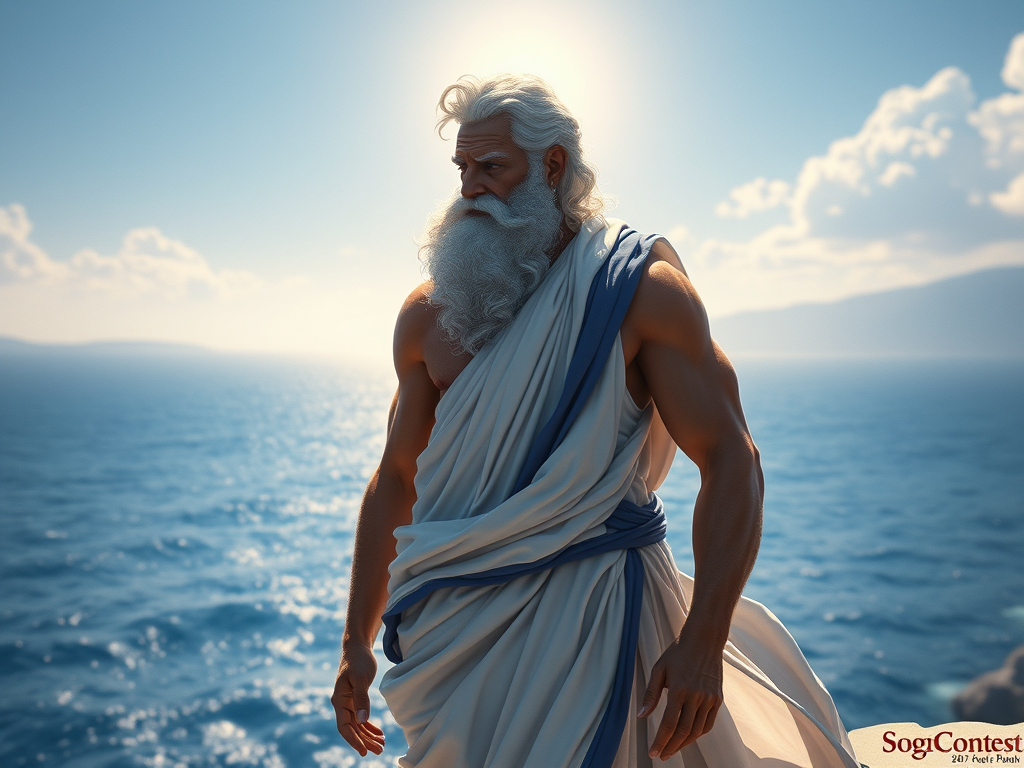
Después de un combate en Potidaea, fue tan intenso lo que vivió que entró en profunda meditación, se dice que se quedó toda una noche y un día de pie mirando el horizonte en la playa, observando el océano, buscando ciertas respuestas, y ahí llegó a una súbita iluminación.
La enseñanza que captó en ese momento fué grande, y de ahí nos trajo la frase ‘Nada puede dañar tu alma’, es nos enseñó. Lo importante es tu conciencia, si la sigues y eres íntegro, no importa lo que haga el mundo, tu esencia sigue en pie.
Al final en un evento y juicio muy extraño Fue condenado por la misma democracia a la muerte. Pero su enseñanza de vida quedó, así que fue y es inmortal. ………..
English version:
Socrates found Peace in midst of conflicts of his time. Socrates served as a soldier for Athens, and participated in a combat in the island of Potidaea, where he experienced the harshest nd terrible aspects of combat.
This experience was very impactful on him. After a Battle in Potidaea he entered in deep Meditation, it is said that he stood still on foot, looking the horizon for hours, looking the ocean.from all night to the other day. He became enlightened and reach some answers.
The lesson he grasped at that moment was profound, and from there he gave us the phrase «Nothing can harm your soul.» What matters is your conscience. If you follow it and are whole, no matter what the world does, your essence remains intact.
His teaching is «nothing can hurt your soul».
In the end, in a very strange event and trial, he was sentenced to death by the same democracy. But his life lesson remained, so he was and Is immortal.
………..
Socrate trovó la pace in mezzo al mondo. Entrò in profonda meditazione e ha trovato risposte. il suo insegnamento è che nulla può danneggiare la tua anima.
Explorando el Amor y la Esperanza en «Mas allá de los sueños»
🇬🇧🇪🇦
«What dreams my come» with Robie Williams, if you remember, it is the story of a doctor who passes away, appears in a transcendent world, and inhabits a Painting that his wife was painting when he passes away. It is a kind of paradise. This film talks about the mystery of Consciousness, about a state that is beyond pain and death, and especially about creativity to create the worlds that we want. The state of Presence, of being there in simple things, of not being so much in the mind but resting in consciousness, in states that give us calm, energy and creativity to achieve what we want to create.
This film is an inspiration for love, transcendence, art and creativity.
…
«Más allá de los sueños» con Robie Williams, si la recuerdan es la historia de un médico que fallece, aparece en un mundo trascendente, y habita en una Pintura que su esposa estaba pintando cuando él fallece. Es una especie de paraíso. Esta película habla del misterio de la Conciencia, de un estado que está más allá del dolor y la muerte, y en especial de la creatividad para crear los mundos que nosotros queramos. El estado de Presencia, de estar ahí en las cosas simples, de no estar tanto en la mente sino reposar en la conciencia, en estados que nos dan calma, energía y creatividad para lograr lo que nosotros queremos crear.
Esta película es inspiradora para el amor, la trascendencia, el arte y la creatividad.
Zeno era un rico mercader de naves, que en un naufragio perdió todo. Cuando pasó esto él buscó respuestas. Encontró un filósofo y comenzó a aprender ese camino. Más tarde, el fundará la escuela de ‘stoa’. Las grandes lecciones de Zeno son sobre la Armonía y felicidad que pueden vivirse en cualquier circunstancia. Y que podemos encontrar dentro de nosotros. Él en su experiencia aprendió que las fuerzas de la naturaleza pueden quitarte todo lo que crees que es «tuy@». Y a estar sereno en medio del cambio. En ansiedad, confusión, preocupaciones, aún tenemos esta vida, y eso es lo esencial, tu tesoro, eres vida, una maravillosa pieza de vida que está viva en este instante.
………..
English
Zeno was a rich merchant of ships who in voyage lost everything in a shipwreck. And when this happens he search some answers. He encounter a philosopher and began a journey in this path. Later, he founded a school: the ‘stoa’. Zeno great lessons are about the harmony and happiness that can be lived in any circumstance. And to be found inside ourselves. Like his own experience he learn that the Forces of nature can take away everything that you believe that are ‘yours’. And stay in the middle of change with serenity. In middle of anxiety, confusion, worries, we still have this life, and that is the essential, your Treasure, you are life, you are a marvelous piece of life that is alive in this instant.
……….
Italiano:
Zeno era un ricco mercante di navi, che in un viaggio ha perso tutto in un naufragio; e quando questo accade cerca delle risposte. Incontra un filosofo e inizia un viaggio su questa strada. Dopo, ha fondato una scuola: la Stoa. Le sue grandi lezioni riguardano l’armonia e la felicità che possono essere vissute in ogni circostanza. e per essere trovati dentro noi stessi. come la propria esperienza impara che le forze della natura possono portare via tutto. e rimani nel mezzo con serenità. In mezzo all’ansia, alla confusione, alle preoccupazioni, abbiamo ancora questa vita, e questo è l’essenziale, il tuo Tesoro, sei la vita, sei un meraviglioso pezzo di vita che è vivo in questo istante.
«All things are parts of one single system, which is called nature; the individual life is good when it is in harmony with nature.» ZENO
«Todas las cosas son parte de un único sistema, llamado naturaleza: la vida individual es buena cuando está en armonia con la naturaleza». ZENO.
Enseñanzas ancestrales renacen, De reconexión y unión, Con la conciencia y naturaleza, La sociedad distraída, Por algoritmos que organizan tu atención, por miles de estímulos, y más… Para producir más distracción,
Y concentración…
Y explo…… Y por eso urge la reconexión, Nuevos tiempos, Nuevas dict…… Digitales y sociales, Donde se exigen pases para moverse, Donde pronto querrán poner un chip, Y ese será el fin. Es urgente recordar Lo que somos, Lo que está en nosotros
ejercicio poético.
Ancestral teachings are reborn, Of reconnection and union, With consciousness and nature, The distracted society, By algorithms that organize your attention, by a lot of stimulus, and more, The distractions,
We need concentration And that is why the reconnection is urgent, New Times, New dicta…….. Digital and social, Where passes are required to move, Where soon they will want to put a chip, And that will be the end. It is urgent to remember What we are, What is in us.
Be present. Breath, look, feel, hear. Put your feet on the ground. Sense.
Present is all we have. Present. Is a gift, that is why it’s called Present.
Manténte presente. Respira, mira, siente. Pon tus pies en la tierra. Siente.
El presente es lo único que tenemos. Un regalo, por eso se llama presente.
Essere presenti. Respira, guarda, ascolta. Metti i piedi per terra. Senti.
Il presente é l’unica cosa que abbiamo. Ecco perché si chiama Presente.
………..0………..
Todo está Floreciendo/ Everything is flourishing.
Todo florece en nuestro continente, en otros llega el otoño, y cambian las estaciones.
Somos Naturaleza, cocinados en las estrellas, siendo con el cosmos. Los procesos naturales nos influyen, por eso se sienten cambios internos, en la mente y emociones, que no son siempre conscientes porque no estamos atentos. Sin embargo ocurre, y sigue su camino, por eso es esencial estar atent@s a nuestro proceso interno y a lo externo, y ver como al final son uno, en una sinfonía que fluye por los sentidos y por otras dimensiones en nosotros.
Cada estación tiene una lección. Ver y sentir cada estación es importante porque lo externo y lo interno es lo mismo. Es el misterio de ser humano en este planeta.
We are Nature, made in the stars, one with the cosmos. Natural seasons affects us, that’s why the feelings of internal changes in mind and emotion in every season occurs, not always conscious, because we are not attentive. Though is happening, and goes on, that’s why it is esencial to be attentive to our internal process and to the external, and see that at the end they are one, in a symphony that flows in our senses and in our secrets dimensions.
Every season has a lesson, and to see and feel every season is important because the external and the internal are the same. It’s the mistery of being human in this planet.
……….0………..
Cómo decirlo//How to describe..
Si pudiéramos encontrar las palabras para esto… por eso existe el arte, literatura, música, danza, espíritu de exploración, etc. Ellos nos pueden llevar más cerca de esta percepción de la vida. Experimentamos esta belleza dentro de nosotros, sentimos, y hay un anhelo por compartir estas profundas emociones y percepciones. Pero estamos en un estado de olvido, y necesitamos recordar, por eso es importante estar en el momento presente. Para ver, escuchar y sentir esto. . .
If we can find the words for this… that’s why exists arts, literature, music, dance, exploration spirit, etc. They can take us close to this perception of life. We experience this beauty inside us, we sense, and there is a longing for share the deepest emotions and perceptions. But, we are in a state of oblivion, and we need to remember, that’s why is important to stay in the Present moment. To see, hear and sense this.
. .
Non c’e parole per questo… ma esiste l’ arte, literatura, música, ballare, lo spirito científico, etc. Loro portano vicino di questa percezione di la Vita. Ci sentiamo, c’e un desiderio per condividere queste emozioni e percezioni.
Mi viaje creativo.
Momentos en diferentes lugares y tiempos creando. Momentos registrados en la cámara. Nostalgia por algunos y alegría por otros. Éste es mi viaje creativo que comparto con ustedes con alegría.
El camino creativo es hermoso. En la pintura es todo un viaje interior y exterior que nos transforma y transforma al mundo a nuestro alrededor.
#arte🎨🖌 #art🎨🖌️ #artistoninstagram🎨
https://www.instagram.com/reel/DKDA0X8vyrg/?igsh=dzEyazlkMjlvYjJm
Arte, Ecología y Derecho:
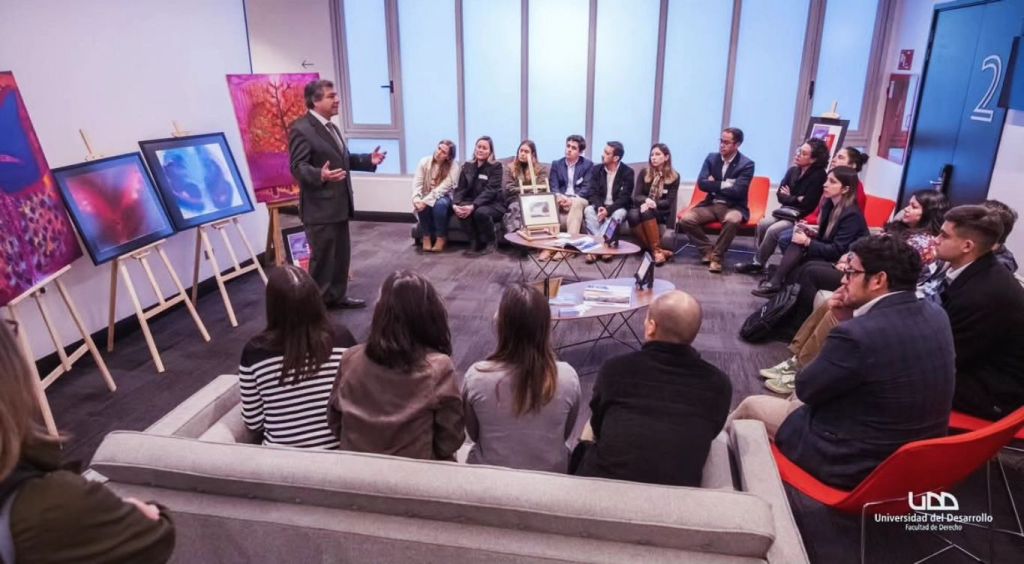
Exposición sobre pintura y medio ambiente. En el Magíster Derecho del Medio Ambiente UDD.
Un importante encuentro entre la pintura y el derecho del Medio ambiente. Un encuentro entre ciencia y técnica con el arte, expresión, alma.
Un necesario encuentro.
Esto es parte de mi exposición itinerante sobre algunos temas que siento importantes para esta época.
En esta ocasión expuse sobre los principios de Inter Cordis: Impermanencia, Compasión e interconexión. Su base en la naturaleza, en la unidad de la mente y corazón con el medio ambiente.
Necesitamos estos espacios, y crear experiencias para quienes por el ajetreo diario de sus ocupaciones o carreras a veces no tienen el espacio para el arte. Así que llevamos el arte y los colores ahí donde estén.
Agradecido de compartir y entregar arte y una visión para el futuro desde aquí.
Agradecimiento especial al director del magíster @raulfcampusano,
A la facultad de @derecho_udd ;
Al tremendo fotógrafo @hablandoconluz.
Y habían varios ejemplares de @revistarose donde hay varias de mis obras.
Estoy realizando exposiciones itinerantes para eventos culturales & sociales (para que lo tengan presente) @faro_udd
Y a todos quiénes estuvieron presentes en hicieron preguntas y compartieron una gran retroalimentación para seguir aprendiendo.
https://www.instagram.com/p/DJ6tg6QgHf0/?igsh=MWVyemc2MTJkZnpqMw==
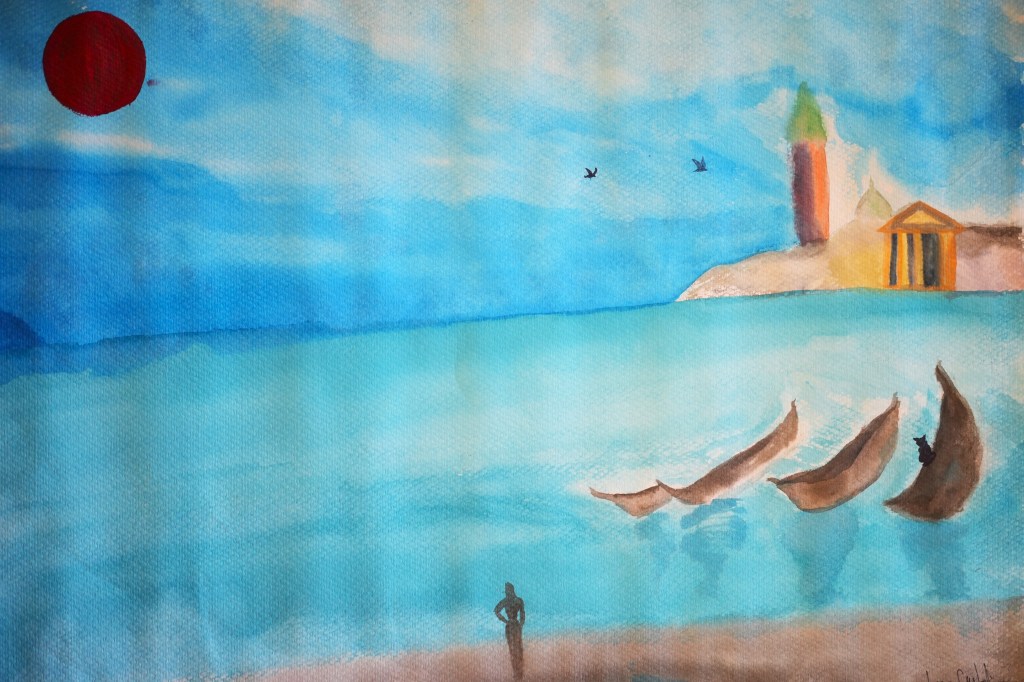
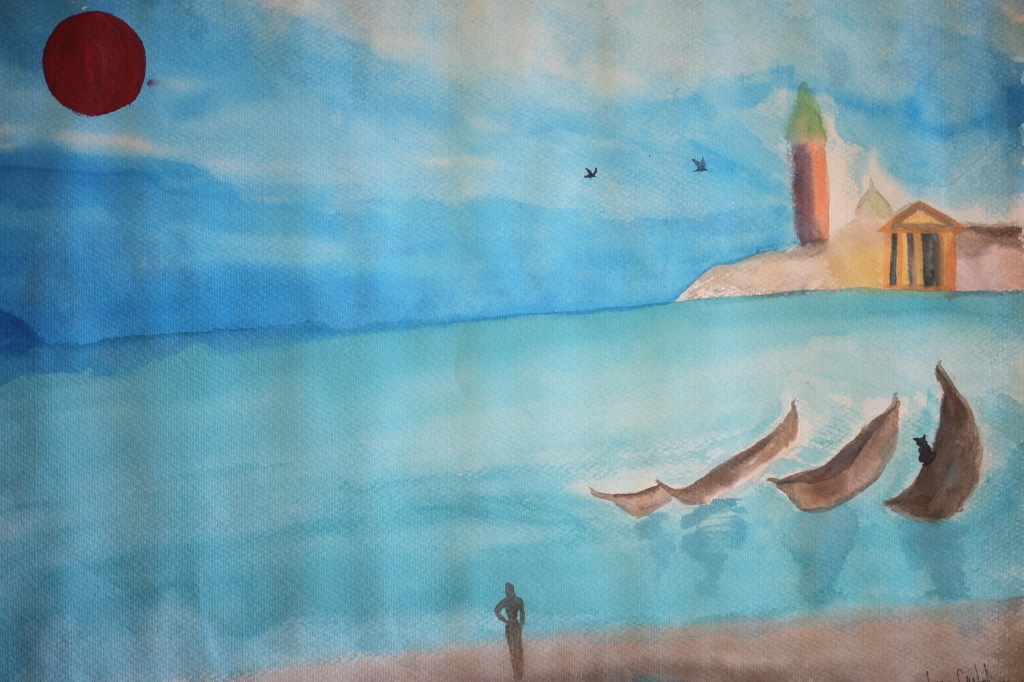
As a young boy standing at the ocean’s edge, I would lose myself in the endless blue horizon. «What would the colors of happiness look like?» I wondered, my imagination soaring beyond the visible world. This question—seemingly innocent yet profoundly philosophical—shadowed me through years of study and work in the field of law. While I was living in the structured realm of legal reasoning, something essential remained unexpressed, a voice within me speaking a language I had yet to fully understand.
I remember sitting in my office surrounded by leather-bound law books, the weight of precedent and procedure pressing down on me, while outside my window, a cardinal’s flash of red against the gray cityscape seemed to carry a message I couldn’t quite decipher. Even then, color spoke to me in whispers I was too busy to hear.
Then came the tempest that would break open my life. The death of my father, followed by other profound departures that i will tell you about in this story; created a constellation of grief in my heart. The solid ground of my existence crumbled beneath my feet. In this shattering, this breaking apart of what was known and comfortable, something unexpected began to emerge.
I still remember when my father and I would swim in the lake and laugh, or when we would play soccer. But in his last days, when he was very ill, he no longer had that spirit and slowly faded.. In his funeral I placed a single white rose in his grasp and felt something fundamental shift within me—the beginning of an understanding that life’s most precious beauty exists at the edge of its impermanence.
Loss continued to shape my days. My faithful companion, a german sheperd named Sultán who had witnessed my journey from student to working in law, died peacefully one autumn morning. I buried him beneath the maple tree where he had spent countless hours watching me read briefs and prepare arguments. The emptiness of his absence echoed through my home—no clicking of nails on hardwood, no warm body curled at my feet as I worked late into the night.
Some months later, a dear companion cat Pitelel, a tender furry friend who often accompanied me while I meditated or painted, died in an accident. And followed Sultán into that mysterious beyond. These companions, who had asked nothing but presence and offered unconditional love, left spaces that could not be filled. Yet somehow, in their absence, they seemed to teach me about presence in ways I had never understood before.
In the midst of that storm, I felt that art was a calling, a guide that came from within me, from the Universe, from Nature, from God. At first, I resisted this pull toward creativity, clinging to the security of my legal career. My rational mind fought against what my soul demanded.
But the calling grew more insistent, impossible to ignore. Like a distant melody becoming clearer with each passing day, I began to hear the true voice of my inner world. I turned to meditation and contemplative practices, creating spaces of silence where this voice could be heard more distinctly.
Then the dreams began—vivid, luminous visions that woke me in the middle of the night, my heart racing with a strange mixture of exhilaration and peace. In one recurring dream, I found myself floating above an endless ocean of color, each wave a different hue, merging and separating in patterns that seemed to contain all the wisdom of the universe. Above me, celestial bodies not found in any earthly astronomy chart pulsed with rhythms that matched my heartbeat.
In dreams, the veil grows thin Between what is and might have been Colors speak what words cannot Truth awakened, never forgot
I would wake from these dreams with my fingertips tingling, as if they had touched something divine and carried back traces of that contact. I began keeping a journal by my bedside, sketching rough approximations of what I had seen, knowing they were merely shadows of the vivid landscapes I had traversed in sleep.
And then came the moment of surrender that would alter the course of my life. With hands that belonged both to the lawyer I had been and the artist I was becoming, I picked up a brush. The first stroke of color against white canvas felt like an electric current—a reconnection to something I had always known but somehow forgotten.
I felt a deep calling, a need to express myself through color and painting. It was as if the colors had always been there, waiting inside me, waiting to be released into the world.
One night, after a particularly powerful dream of concentric rings of light radiating outward from a central point of pure white energy, I rose from bed at 3 AM, drawn to my makeshift studio as if pulled by an invisible thread. Without planning or preliminary sketches, I began to paint. Hours disappeared as I worked in a state between consciousness and dream, my hands guided by something beyond my ordinary self.
When dawn broke through my window, I stepped back to see what had emerged: a canvas alive with spiraling forms in deep indigo and violet, punctuated by bursts of gold that seemed to emanate light rather than merely reflect it. It was the exact vision from my dream, yet somehow more real, more present than even the dream had been. I wept, not from sadness but from recognition—here was the truth I had been seeking in books and logical arguments, presented in the language of light and color that my soul had always spoken.
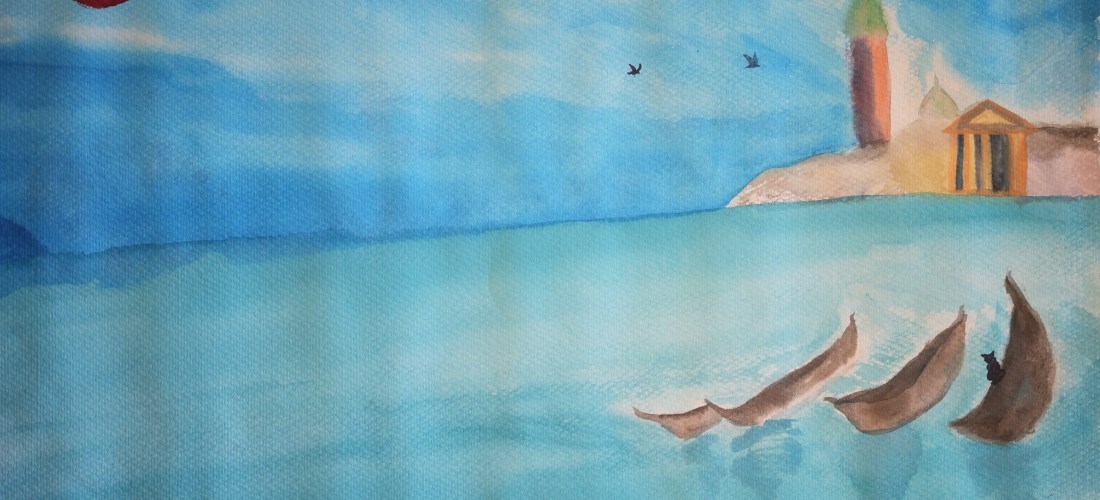
Without formal training but guided by an inner wisdom that transcended technique, I began to translate my visions onto paper and canvas. Each painting became a conversation between my suffering and my hope, between the fleeting nature of human existence and the eternal quality of beauty. In watercolor and acrylic, I captured moments of spiritual illumination—celestial bursts of light, cosmic patterns, and flowing energies that seemed to come from beyond ordinary consciousness.
I remember that night when I was informed that my uncle Gabriel—with whom I had lived during the early years of my university career, and one of my mentors—had suddenly passed away… That night, as grief washed over me in waves, I found myself drawn not to the bottle of whiskey on my shelf but to my paints. The resulting work—a composition of deep blues transitioning to luminous amber—contained my sorrow but also somehow transcended it, as if the very act of creation had alchemized pain into something else, something that could be shared and understood by others who had walked through their own valleys of loss.
Working through the night in my small studio, I would lose myself in the process of creation. The pain of loss gradually transformed into something else—not forgotten, but transmuted, like carbon under pressure becoming diamond. We can go through impermanence with beauty and creativity. Art allows us to transcend suffering, bringing calm, joy, and deep happiness.
The most ordinary moments began to reveal extraordinary beauty to me—the way morning light filtered through steam rising from my coffee cup, the dance of dust motes in a sunbeam, the complex patterns in the bark of the trees I had passed unseeing for years. These observations found their way into my work, connecting the cosmic visions of my dreams with the humble miracle of daily existence.
Each finished piece held something of this transformation. Viewers began to respond, many describing an emotional resonance they couldn’t quite explain. A watercolor of radiating burgundy forms against a cosmic blue background seemed to speak directly to the soul, bypassing the intellect. A heart-like abstraction in vibrant reds touched something primal and universal.
At my first small gallery showing, a woman stood before one of my paintings for nearly an hour, tears streaming silently down her face. When I approached her, she told me she had lost her daughter six months earlier and had not felt anything but numbness since—until this moment, standing before my painting, when she felt her heart beginning to thaw. «You’ve painted grief,» she told me, «but also what lies beyond it.» Her words confirmed what I had sensed: that my personal journey through loss toward transformation was also somehow universal, a path we all walk in our own ways.
Some International recognition followed in online exhibitions in Canadá and other countries, and some finalist paintings in contests from The United States. Yet for me, external success and recognition has always been secondary to the inner journey each painting represents. Freedom and Happiness is the longing of my heart, & to help other awake that light is my purpose. And with that inner clarity the external come naturally. My purpose is to share that vision with the world, bringing colors, shapes, emotions, and transcendence to my artworks and to life.
The dream visions continue, evolving as I evolve. Sometimes I recognize in them the faces of those I’ve lost—my father’s eyes looking back at me from a swirl of celestial light, Sultan faithful presence sensed at the edges of cosmic landscapes, Pitelel inscrutable gaze reflected in the depths of painted pools. They are not gone but transformed, just as my grief has transformed into creation.
We are not separate, but one The artist and the art, the journey and the path Loss carves spaces that beauty fills In the language of color, all is reconciled
Today, my watercolors grace the walls of collectors who sense the spiritual journey contained within each piece. These are not merely decorative artworks but portals to another way of seeing—reminders that beauty can emerge from our darkest moments, that loss can be transformed into creation.
To live with one of my originals is to be in daily conversation with transformation itself. Each morning, as light shifts across its surface, the painting reveals new depths, new possibilities. It whispers of my journey from courtroom to canvas, from grief to wonder, from the structured world to limitless imagination worlds. Sometimes when I stand before a blank canvas now, I feel the presence of everyone I’ve loved and lost gathered around me—not as ghosts of sorrow but as sources of inspiration. Their lives, intertwined with mine, continue to teach me about the impermanence that makes each moment precious and the love that transcends even death.
The young boy who once stood at the ocean’s edge wondering about the colors of happiness has found his answer. Happiness is not a single color but all of them—the dark blues & greens of sorrow, the intense reds of passion, the golds of illumination, all flowing together in the great river of a fully lived life. And I continue to paint this river, one brushstroke at a time, inviting others to recognize in my work the currents of their own journey through this beautiful, transient, mysterious existence we share.
De niño, de pie junto al océano, me perdía en el infinito horizonte azul. «¿Cómo serían los colores de la felicidad?», me preguntaba, mientras mi imaginación se elevaba más allá del mundo visible. Esta pregunta, aparentemente inocente pero profundamente filosófica, me acompañó durante años de estudio y trabajo en el campo del derecho. Mientras me movía en el estructurado mundo del razonamiento jurídico, algo esencial permanecía latente, una voz interior que hablaba un idioma que aún no comprendía del todo.
Recuerdo estar sentado en la oficina, rodeado de libros de derecho encuadernados en cuero, con el peso de los precedentes y los procedimientos oprimiéndome, mientras que, al otro lado de mi ventana, el destello rojo de un cardenal contra el gris paisaje urbano parecía transmitir un mensaje que no podía descifrar. Incluso entonces, el color me hablaba en susurros que, por estar demasiado ocupado, no podía oír.
Entonces llegó la tempestad que destrozaría mi vida. La muerte de mi padre, seguida de otras profundas partidas, que les contaré en esta historia. Todo eso creó una constelación de dolor en mi corazón. La base de mi existencia se derrumbó bajo mis pies. En esta ruptura, en esta ruptura de lo conocido y cómodo, algo inesperado comenzó a surgir.
Aun recuerdo cuando con mi padre nos bañábamos en el lago y nos reíamos, o cuando jugábamos fútbol. Pero en sus últimos días que pasó muy enfermo ya no tenía ese ánimo y se apagó lentamente. En su funeral Puse una rosa blanca en sus manos y sentí un cambio fundamental en mi interior: el comienzo de comprender que la belleza más preciada de la vida existe al borde de su impermanencia.
La pérdida continuó moldeando mis días. Mi fiel compañero, un pastor alemán llamado Sultán, que había presenciado mi paso de adolescente a procurador, murió en paz una mañana de otoño. Lo enterré bajo el Álamo donde había pasado incontables horas observándome leer escritos y preparar argumentos. El vacío de su ausencia resonaba en mi casa: ni el repiqueteo de clavos sobre la madera, ni su cuerpo cálido acurrucado a mis pies mientras trabajaba hasta altas horas de la noche.
Meses después, mi querido compañero, el gato Pitelel, un tierno peludo de cuatro patas que me acompañó muchas veces a meditar o pintar, murió en un accidente. Y así siguió a Sultán a ese misterioso más allá. Estos compañeros, que solo habían pedido presencia y ofrecido amor incondicional, dejaron espacios inabarcables. Sin embargo, de alguna manera, en su ausencia, parecieron enseñarme sobre la presencia de maneras que nunca antes había comprendido.
En medio de esa tormenta, sentí que el arte era una vocación, una guía que venía de mi interior, del Universo, de la Naturaleza, de Dios. Al principio, resistí esta atracción hacia la creatividad, aferrándome a la seguridad de mi carrera legal. Mi mente racional luchaba contra lo que mi alma exigía.
Pero la llamada se hizo más insistente, imposible de ignorar. Como una melodía lejana que se aclaraba cada día, comencé a escuchar la verdadera voz de mi mundo interior. Recurrí a la meditación y a las prácticas contemplativas, creando espacios de silencio donde esta voz se escuchaba con mayor claridad.
Entonces comenzaron los sueños: visiones vívidas y luminosas que me despertaban en mitad de la noche, con el corazón acelerado por una extraña mezcla de euforia y paz. En un sueño recurrente, me encontraba flotando sobre un océano infinito de color, cada ola de un tono diferente, fusionándose y separándose en patrones que parecían contener toda la sabiduría del universo. Sobre mí, cuerpos celestes que no se encuentran en ninguna carta astronómica terrenal pulsaban con ritmos que coincidían con los latidos de mi corazón.
En sueños, el velo se adelgaza Entre lo que es y lo que pudo haber sido Los colores dicen lo que las palabras no pueden Verdad despierta, jamás olvidada
Despertaba de estos sueños con un hormigueo en las yemas de los dedos, como si hubieran tocado algo divino y trajeran rastros de ese contacto. Empecé a escribir un diario junto a mi cama, dibujando aproximaciones aproximadas de lo que había visto, sabiendo que eran solo sombras de los vívidos paisajes que había recorrido en sueños.
Y entonces llegó el momento de rendición que cambiaría el curso de mi vida. Con manos que pertenecían tanto al procurador de derecho que había sido como al artista en el que me estaba convirtiendo, tomé un pincel. La primera pincelada sobre el lienzo blanco se sintió como una corriente eléctrica: una reconexión con algo que siempre había sabido, pero que de alguna manera había olvidado.
Sentí una profunda llamada, la necesidad de expresarme a través del color y la pintura. Era como si los colores siempre hubieran estado ahí, esperando dentro de mí, esperando ser liberados al mundo.
Una noche, tras un sueño particularmente poderoso de anillos concéntricos de luz que irradiaban desde un punto central de energía blanca pura, me levanté de la cama a las 3 de la mañana, atraído a mi estudio improvisado como si me tirara un hilo invisible. Sin planificación ni bocetos preliminares, comencé a pintar. Las horas se desvanecieron mientras trabajaba en un estado entre la consciencia y el sueño, mis manos guiadas por algo más allá de mi yo ordinario.
Cuando el amanecer irrumpió por mi ventana, retrocedí para ver lo que había emergido: un lienzo vibrante con formas en espiral en tonos índigo y violeta intensos, salpicado de destellos dorados que parecían emanar luz en lugar de simplemente reflejarla. Era la visión exacta de mi sueño, pero de alguna manera más real, más presente que incluso el sueño. Lloré, no de tristeza, sino de reconocimiento: aquí estaba la verdad que había estado buscando en libros y argumentos lógicos, presentada en el lenguaje de luz y color que mi alma siempre había hablado.
Sin formación académica, pero guiado por una sabiduría interior que trascendía la técnica, comencé a plasmar mis visiones en papel y lienzo. Cada pintura se convirtió en una conversación entre mi sufrimiento y mi esperanza, entre la fugacidad de la existencia humana y la eternidad de la belleza. En acuarela y acrílico, capturé momentos de iluminación espiritual: destellos celestiales de luz, patrones cósmicos y energías fluidas que parecían provenir de más allá de la conciencia ordinaria.
Recuerdo aquella noche en que me informaron del repentino fallecimiento de mi tío Gabriel, con quien viví durante los primeros años de mi carrera universitaria y uno de mis primeros maestros y mentores. Esa noche, mientras el dolor me invadía en oleadas, me sentí atraído no por la botella de whisky en mi estantería, sino por mis pinturas. La obra resultante —una composición de azules profundos que se transformaban en ámbar luminoso— contenía mi dolor, pero también, de alguna manera, lo trascendía, como si el acto mismo de crear hubiera alquimizado el dolor en algo más, algo que pudiera ser compartido y comprendido por otros que habían atravesado sus propios valles de pérdida.
Trabajando toda la noche en mi pequeño estudio, me perdía en el proceso creativo. El dolor de la pérdida se transformaba gradualmente en algo más; no se olvidaba, sino que se transmutaba, como el carbono bajo presión que se convierte en diamante. Podemos transitar la impermanencia con belleza y creatividad. El arte nos permite trascender el sufrimiento, brindando calma, alegría y una profunda felicidad.
Los momentos más cotidianos comenzaron a revelarme una belleza extraordinaria: la forma en que la luz de la mañana se filtraba a través del vapor que salía de mi taza de café, la danza de las motas de polvo en un rayo de sol, los complejos patrones en la corteza de los árboles que había pasado sin ver durante años. Estas observaciones se abrieron paso en mi obra, conectando las visiones cósmicas de mis sueños con el humilde milagro de la existencia cotidiana.
Cada pieza terminada contenía algo de esta transformación. Los espectadores comenzaron a responder, muchos describiendo una resonancia emocional que no podían explicar del todo. Una acuarela de formas radiantes color burdeos sobre un fondo azul cósmico parecía hablar directamente al alma, sin pasar por el intelecto. Una abstracción con forma de corazón en rojos vibrantes tocaba algo primordial y universal.
En mi primera pequeña exposición en una galería, una mujer permaneció de pie frente a una de mis pinturas durante casi una hora, con lágrimas corriendo silenciosamente por su rostro. Cuando me acerqué a ella, me dijo que había perdido a su hija seis meses antes y que desde entonces no había sentido nada más que entumecimiento, hasta ese momento, de pie frente a mi pintura, cuando sintió que su corazón comenzaba a descongelarse. «Has pintado el dolor», me dijo, «pero también lo que hay más allá». Sus palabras confirmaron lo que presentía: que mi camino personal a través de la pérdida hacia la transformación era, de alguna manera, universal, un camino que todos recorremos a nuestra manera.
Luego algunas exhibiciones internacionales online llegaron en Canadá y otros lugares, y algunas pinturas fueron finalistas en concursos en Estados Unidos. Sin embargo, para mí, el éxito y el reconocimiento externos siempre han sido secundarios frente al viaje interior que cada pintura representa. La libertad y la felicidad son el anhelo de mi corazón, y ayudar a otros a despertar esa luz es mi propósito. Y con esa claridad interior, lo externo surge de forma natural. Mi propósito es compartir esa visión con el mundo, aportando colores, formas, emociones y trascendencia a mis obras y a la vida.
Las visiones oníricas continúan, evolucionando a medida que yo evoluciono. A veces reconozco en ellas los rostros de aquellos que he perdido: los ojos de mi padre mirándome desde un remolino de luz celestial, la fiel presencia de Sultán percibida en los confines de los paisajes cósmicos, la mirada inescrutable de Pitelel reflejada en las profundidades de los estanques pintados. No se han ido, sino que se han transformado, al igual que mi dolor se ha transformado en creación.
No estamos separados, sino uno El artista y el arte, el viaje y el sendero La pérdida crea espacios que la belleza llena En el lenguaje del color, todo se reconcilia
Hoy, mis acuarelas adornan las paredes de coleccionistas que perciben el viaje espiritual que encierra cada pieza. No son meras obras de arte decorativas, sino portales a otra forma de ver: recordatorios de que la belleza puede surgir de nuestros momentos más oscuros, de que la pérdida puede transformarse en creación.
Vivir con uno de mis originales es dialogar a diario con la transformación misma. Cada mañana, a medida que la luz se desliza sobre su superficie, la pintura revela nuevas profundidades, nuevas posibilidades. Susurra sobre mi viaje del tribunal al lienzo, del dolor al asombro, del mundo estructurado al mundo de la imaginación infinita.
A veces, cuando me encuentro ante un lienzo en blanco, siento la presencia de todos los que he amado y perdido reunidos a mi alrededor, no como fantasmas de tristeza, sino como fuentes de inspiración. Sus vidas, entrelazadas con la mía, siguen enseñándome sobre la impermanencia que hace precioso cada momento y el amor que trasciende incluso la muerte.
El niño que una vez se paró a la orilla del mar preguntándose sobre los colores de la felicidad ha encontrado su respuesta. La felicidad no es un solo color, sino todos ellos: los azules verdosos y profundos de la tristeza, los rojos intensos de la pasión, los dorados de la iluminación, todos fluyendo juntos en el gran río de una vida plena. Y sigo pintando este río, pincelada a pincelada, invitando a otros a reconocer en mi obra las corrientes de su propio viaje a través de esta hermosa, fugaz y misteriosa existencia que compartimos.